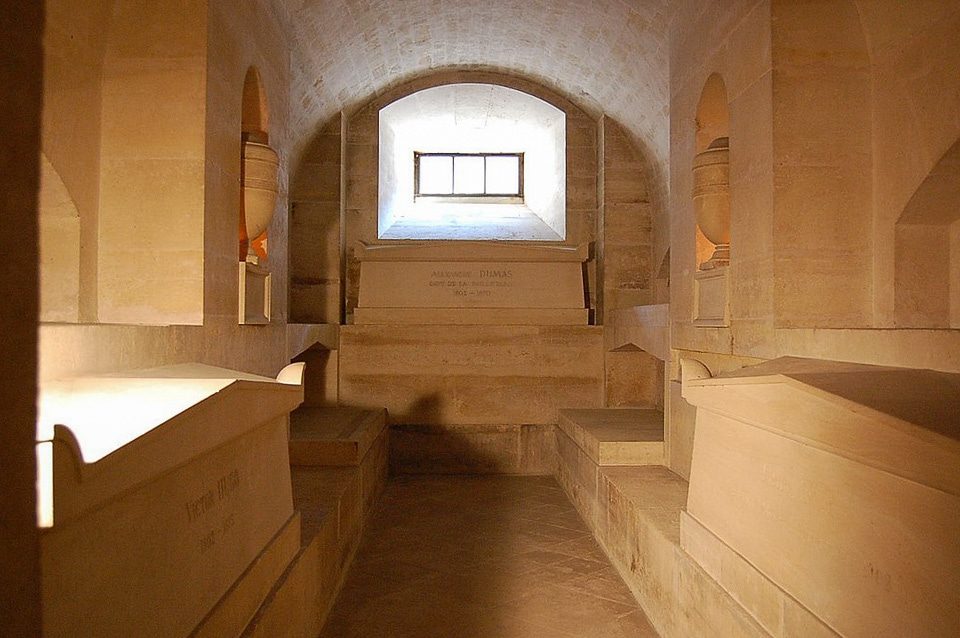
The Crypt
The final resting place for national figures including Voltaire, Jean-Jacques Rousseau, Victor Hugo, and Marie Curie.
Look for the individual plaques marking each person's burial chamber.

The Panthéon stands at the summit of the Montagne Sainte-Geneviève as France's most deliberate statement about national memory and secular virtue. Originally commissioned as a church, the monument was transformed during the Revolution into a temple for the nation's greatest figures. Its crypt holds the remains of seventy-five individuals whose lives shaped French intellectual and political history.
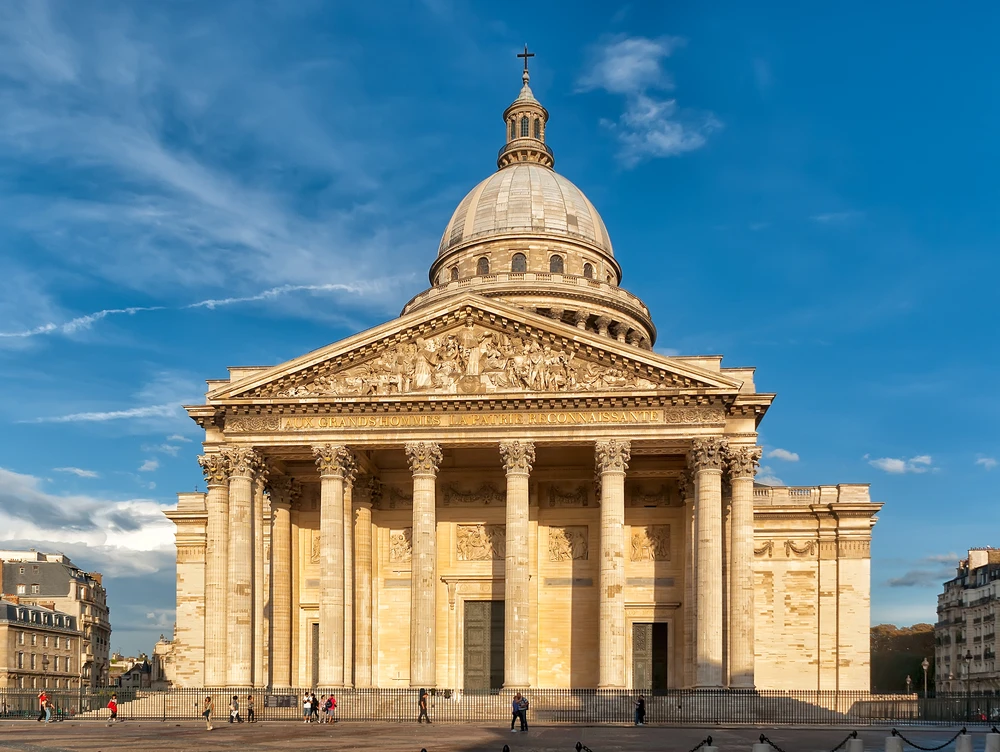
Quick answer
Why is the Panthéon in Paris important primarily because it serves as France's national mausoleum, housing figures like Voltaire, Rousseau, Victor Hugo, Marie Curie, and Simone Veil. The building embodies revolutionary ideals through its transformation from religious church to secular temple, with its inscription 'Aux grands hommes la patrie reconnaissante' declaring the nation's gratitude to its greatest citizens. Its neoclassical architecture by Jacques-Germain Soufflot influenced civic buildings across Europe and the Americas.
The Panthéon's importance begins with a paradox: Louis XV commissioned it as the Church of Saint Geneviève in 1744, yet within fifty years revolutionaries stripped its religious function and converted it into a burial ground for secular heroes. This transformation captures France's shift from monarchy to republic in stone and intention. The building became a battleground for national identity. The revolutionary government interred Mirabeau and Voltaire in 1791, establishing the precedent that intellectual achievement and political courage merited the same honors previously reserved for kings and saints. Napoleon briefly restored its religious function, but subsequent governments returned it to secular purpose. Each regime used the crypt's selection process to define French greatness according to its own values—monarchists buried generals, republicans honored writers and philosophers, modern governments recognized scientists and resistance fighters. Why is the Panthéon in Paris important to visitors today rests on this layered narrative. The structure itself demonstrates Soufflot's engineering innovation: he supported the massive dome on slender columns using hidden iron reinforcements, creating an interior flooded with light that inspired the United States Capitol and countless civic buildings. Foucault installed his pendulum here in 1851, choosing the Panthéon's height and symbolic weight to demonstrate Earth's rotation. The crypt's occupants represent three centuries of intellectual history—from Enlightenment philosophers who questioned absolute monarchy to Marie Curie, the first woman interred on her own merits in 1995, to Josephine Baker, honored in 2021 for her resistance work and civil rights advocacy. The Latin Quarter location connects the Panthéon to the Sorbonne and centuries of academic tradition. Visitors at Place du Panthéon stand where students debated revolutionary ideas and where the monument's inscription still promises that a grateful nation remembers those who expanded human understanding and defended republican values. The building's importance lies not in aesthetic beauty alone but in its continuous function as France's deliberate answer to Westminster Abbey—a space where the state honors citizens whose work transcended their lifetimes.
“The Panthéon transformed from royal church to republican temple within a generation, capturing France's revolutionary redefinition of greatness in a single building.”
In 1744, King Louis XV vowed to replace the crumbling abbey church of Sainte-Geneviève with a monument worthy of Paris's patron saint. Architect Jacques-Germain Soufflot began construction in 1758, designing a cruciform basilica crowned by a triple-shell dome that soared 83 meters above the Latin Quarter. Soufflot fused the lightness of Gothic structure with the clarity of classical geometry, embedding iron reinforcements inside stone columns to carry unprecedented loads. The church was nearly complete when the French Revolution erupted in 1789. On April 4, 1791, the National Constituent Assembly voted to transform Saufflot's church into a secular mausoleum for the nation's great citizens—the "Panthéon." The pediment inscription was changed from honoring Sainte Geneviève to reading "Aux grands hommes la patrie reconnaissante" (To great men, the grateful homeland). Windows were bricked up to darken the interior, converting a space of worship into a temple of civic memory. The first to be interred was Honoré Gabriel Riqueti, comte de Mirabeau, in 1791, though his remains were later removed. Voltaire and Jean-Jacques Rousseau followed soon after, cementing the Panthéon's role as a burial ground for philosophers, writers, scientists, and statesmen. Throughout the nineteenth century, the building oscillated between religious and secular use as regimes changed. Napoleon returned it to the Church in 1806; the July Monarchy reclaimed it as a Panthéon in 1830; and the Second Empire restored Catholic rites until 1885, when Victor Hugo's state funeral permanently anchored its republican identity. Why is the Panthéon in Paris important to understanding French political history? It embodies the tension between monarchy and republic, faith and reason. Today, visitors descend the crypt stairs to walk among the tombs of 81 figures, including Marie Curie, Alexandre Dumas, and Simone Veil. Foucault's pendulum still swings beneath Soufflot's dome, demonstrating the Earth's rotation in the same nave where revolutionaries once debated the meaning of greatness.
Jacques-Germain Soufflot begins construction of the Church of Sainte-Geneviève under commission from Louis XV.
Soufflot's church is completed after his death, incorporating iron-reinforced masonry and a monumental dome.
The National Constituent Assembly converts the church into a secular mpantheon for France's distinguished citizens.
Mirabeau becomes the first person interred, followed by Voltaire and Rousseau within two years.
Napoleon restores the building to Catholic worship, renaming it the Church of Sainte-Geneviève.
The July Monarchy reclaims the structure as a civic Panthéon following the revolution of 1830.
Victor Hugo's state funeral permanently establishes the Panthéon's republican and secular purpose.
Marie Curie becomes the first woman honored on her own merit, joining 80 other figures in the crypt.
The Panthéon serves as a mausoleum for France's most distinguished citizens and a site of scientific significance. Its interior blends neoclassical architecture with profound historical and physical demonstrations.
The final resting place for national figures including Voltaire, Jean-Jacques Rousseau, Victor Hugo, and Marie Curie.
Look for the individual plaques marking each person's burial chamber.
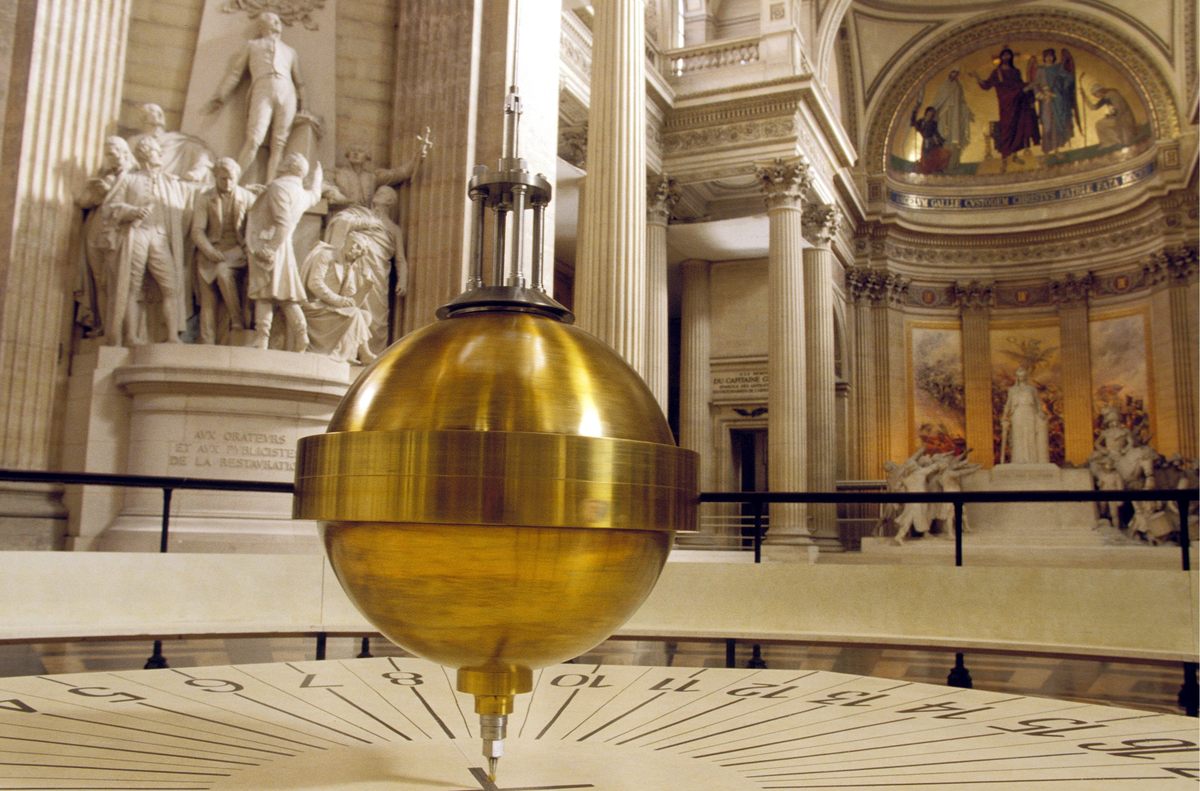
A replica of the original experiment installed by Léon Foucault in 1851 to demonstrate the rotation of the Earth.
Watch the sphere oscillate from the center of the nave.
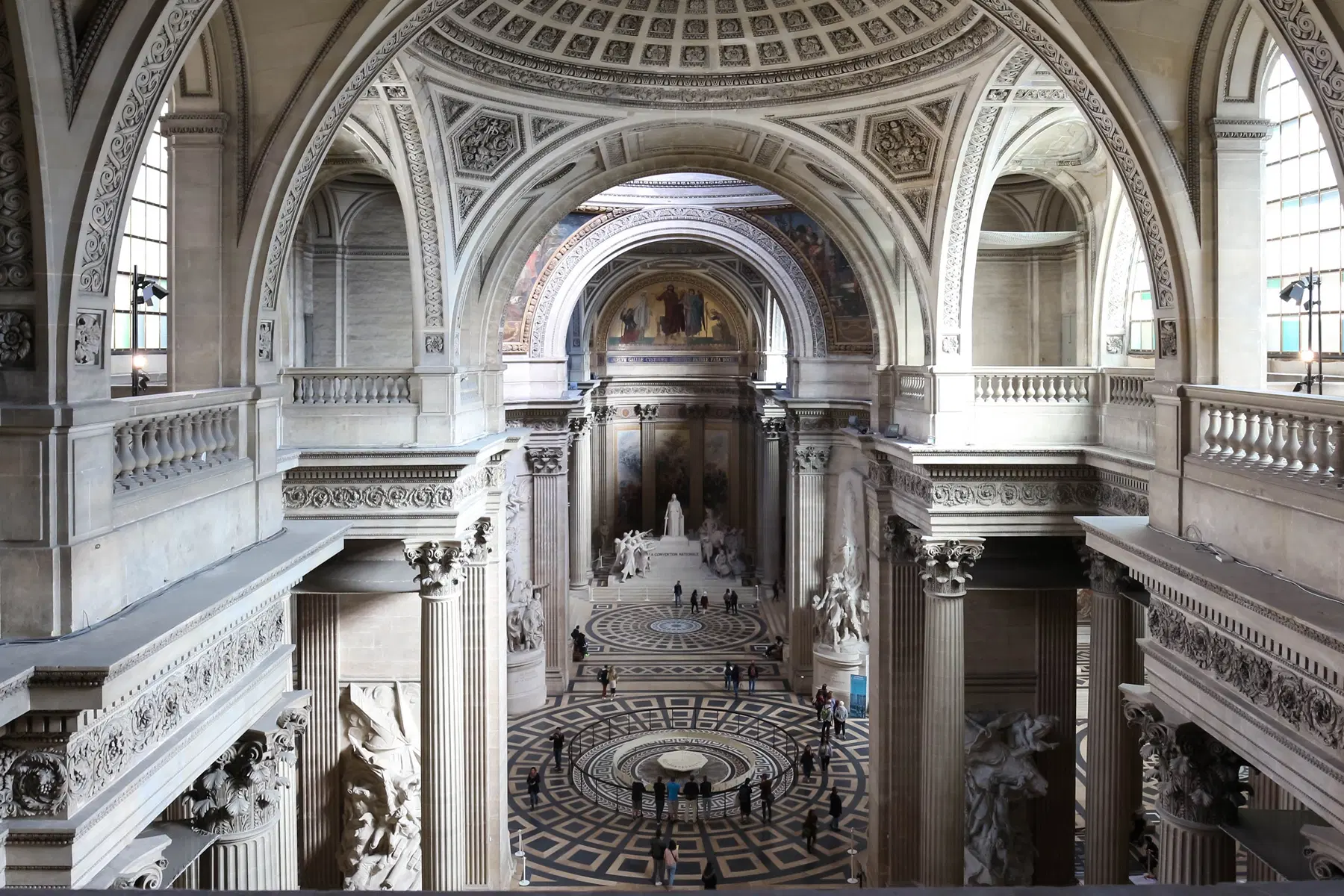
The central hall features Corinthian columns and expansive wall space decorated with neoclassical paintings.
Observe the paintings depicting the life of Saint Genevieve.
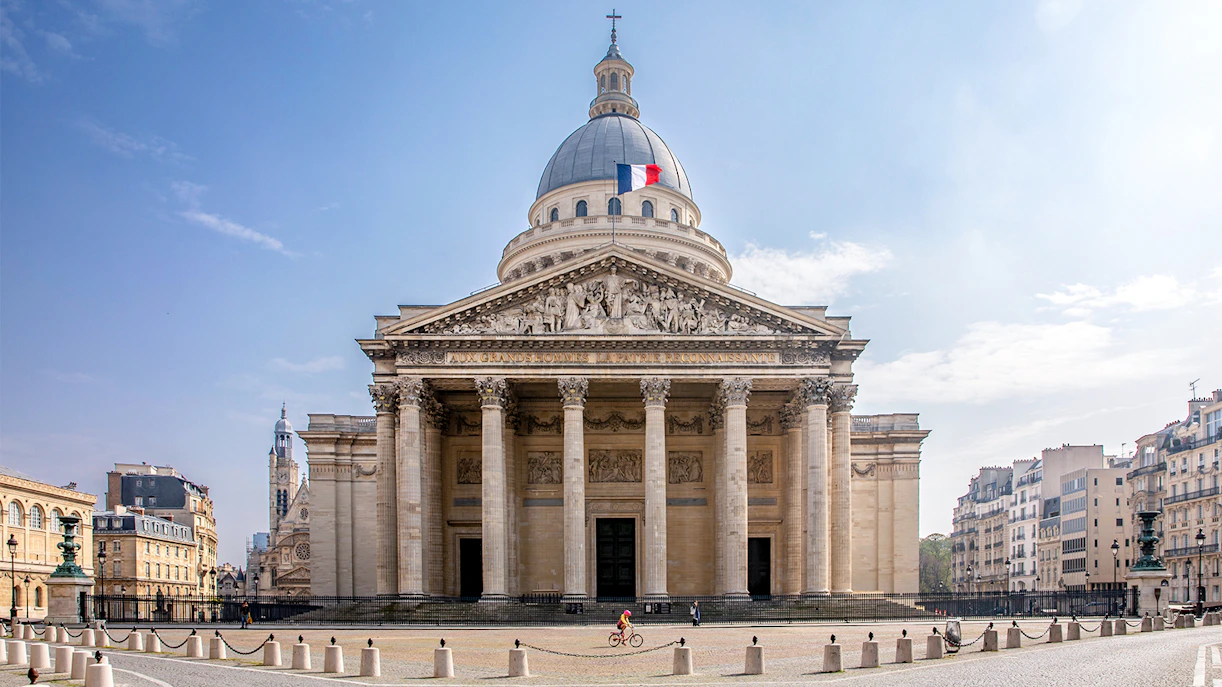
The architectural crowning feature designed by Jacques-Germain Soufflot inspired by the Roman Pantheon.
View the dome from the floor to appreciate its construction.
The Panthéon is open daily to visitors throughout the week. Guests may plan their visit according to the standard operating schedule below.
The best arrival window for the Panthéon is 10:00–11:30. Arriving during this early period helps avoid peak mid-day crowds and longer wait times.
—
Visiting on weekday mornings provides the quietest experience for exploring the nave and crypt. Arrive at 10:00 to navigate the 41 steps before large groups.
Mild, 12–16°C
These shoulder season months offer comfortable temperatures for walking to the Place du Panthéon. Crowds are generally lower than during the height of summer.
—
Expect significant visitor volume and potential queues. Weekends are consistently busier throughout the year, making early morning access more important for a structured visit.
Verdict: The concrete best slot is Tuesday to Thursday, arriving at the 10:00 opening, during the months of April or October.
The Panthéon is located at Place du Panthéon, 75005 Paris, France, in the heart of the Latin Quarter. Visitors typically find the Metro or RER lines the most efficient way to navigate the dense surrounding street network.
Line 10 to Cardinal Lemoine station
Line B to Luxembourg station
Line 84 to Panthéon stop
Drop-off at Place du Panthéon
Visitors should note that the main entrance requires ascending 41 steps; those requiring step-free access should inquire at the site for alternative entry routes. Planning your arrival ensures you have sufficient time to navigate the immediate area before proceeding to the entrance.
Everything you need to know about why is the pantheon in paris important
The building serves as a secular temple dedicated to the great men and women who shaped French history, representing a shift toward Enlightenment ideals. Understanding why is the pantheon in paris important helps visitors appreciate its evolution from a church to a national mausoleum.
Its architecture is a prime example of Neoclassicism, blending Greek-inspired porticoes with a massive dome that defined the Parisian skyline of the 18th century. This structure remains a major Paris landmark due to its influence on later public building designs.
It holds the remains of esteemed figures such as Victor Hugo, Marie Curie, and Voltaire, solidifying its status as a place of national memory. Many guests ask why is the pantheon in paris important during their stay to understand the country's reverence for its intellectual heroes.
To avoid the largest crowds, the best arrival window is 10:00–11:30. Arriving early ensures a more peaceful exploration of the grand interior and the crypt.
The standard adult entry fee is 16 EUR, which includes access to both the main monument level and the lower crypt. This fee supports the ongoing preservation of the site.
Its design by Jacques-Germain Soufflot was intended to compete with the grandeur of Rome, showcasing engineering prowess through its complex dome structure. This is a central reason why is the pantheon in paris important to historians of European architecture.
There are 41 steps to navigate throughout the monument, particularly when accessing different levels of the crypt. Visitors with mobility concerns should plan accordingly for these architectural transitions.